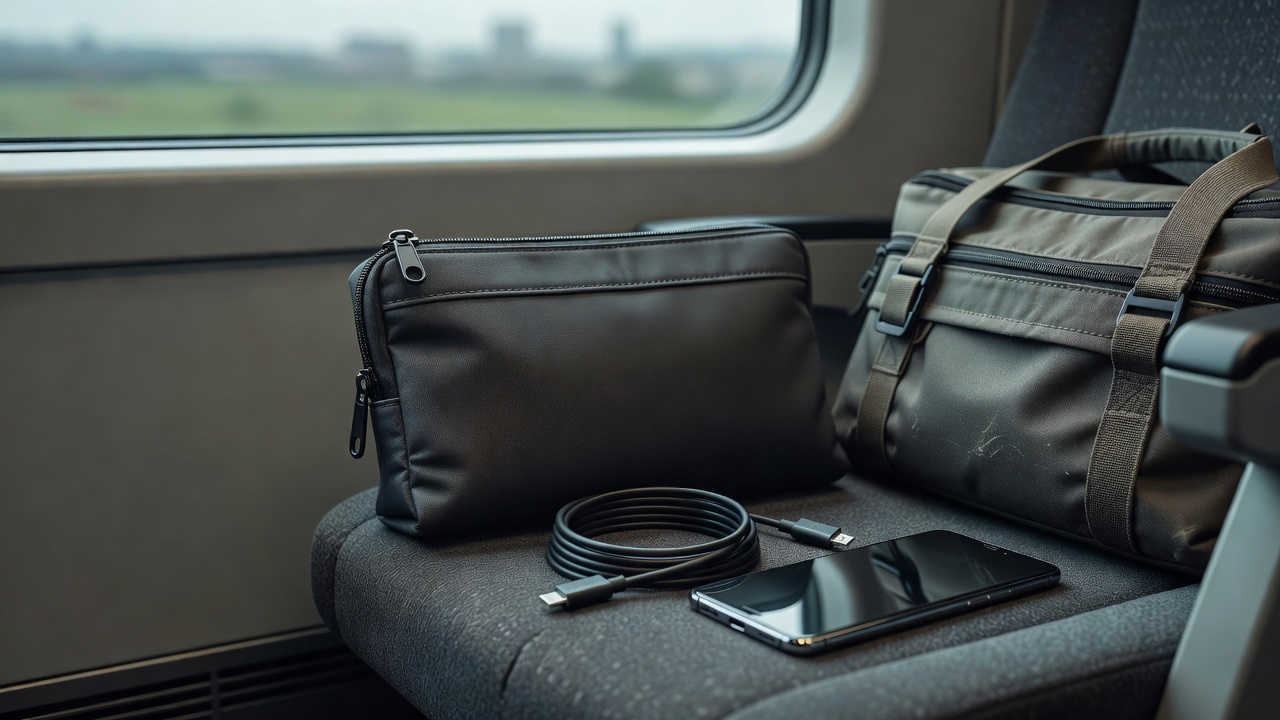
Organise around the next check
Picture the first hour of your trip: leaving home, finding a ticket, showing identification and locating a platform or gate. These tasks suggest what belongs near the opening of your personal bag. They do not require a specialist organiser for every journey. A zipped internal pocket may already provide a reliable home for the items you repeatedly handle.
A document wallet becomes useful when you carry several passports, paper reservations or multiple currencies. Look for an opening that lets you identify the right item without spreading everything across a counter. Check the wallet with your actual documents before travelling. Some compact designs bend boarding passes or make a passport difficult to remove quickly.
Keep access balanced with discretion. An exposed outer pocket is convenient, but it may not be a sensible place for a passport in a crowded station. No pouch or “anti-theft” label guarantees protection. Close zips, avoid displaying all your valuables at once, and follow local advice rather than relying on a product claim.
Make power a compatibility question
A power bank can cover a long day away from sockets, but capacity alone is a poor way to choose one. Check the ports, the supported charging protocol, the cable rating and the requirements of your device. A small unit that reliably charges your phone may be more practical than a heavy laptop-capable battery you rarely use.
A USB-C connector describes a physical connection, not every charging capability. The USB Implementers Forum provides information about USB standards, while your device and charger manuals establish their specific supported features. With a multi-port charger, power may be shared across connected devices. Test your complete combination at home rather than discovering reduced charging speed during a connection.
Spare lithium batteries and power banks generally belong in cabin baggage, with terminals protected against short circuits. Capacity thresholds, approval requirements, quantity limits and rules on in-flight use can differ. Consult the Federal Aviation Administration’s PackSafe guidance, International Air Transport Association passenger guidance and your operating airline. If your cabin bag is gate-checked, tell the staff and remove items that cannot travel in the hold as instructed.
Prepare for a phone that is unavailable
Save essential information before departure: your accommodation address, onward travel details and a contact you can reach if plans change. Offline access should be tested in airplane mode. A screenshot is not always a valid ticket because some services require a live or rotating code. Check the operator’s instructions and keep a paper alternative where it is accepted and useful.
Do not treat a cloud backup as an offline backup. A photograph of a passport can help explain a loss, but it does not replace the original travel document. Protect sensitive copies with your device’s security features and avoid leaving them on shared computers or openly accessible links. Take only the information you actually need.
A luggage tracker may help locate a bag, but it depends on its battery, radio system and nearby participating devices. Apple AirTag support explains features and limitations for that product; other systems work differently. A tracker is not a guaranteed live location service and does not replace reporting delayed luggage to the carrier. Use a discreet contact label as well, without publishing unnecessary personal information.
Rehearse one simple reset
After each ticket check, put the document back in the same place before moving on. Before leaving a seat, look at the pocket, floor and charging point. A repeatable reset costs no luggage space and is often more dependable than adding another accessory. Keep your essential kit small enough that you can recognise what is missing.
Clean organisers according to their care labels and inspect cable ends for damage. Avoid carrying a frayed “spare” that you would not trust at home. If a battery is swollen, damaged or recalled, do not pack it; follow manufacturer and local disposal guidance. Finally, check the rules again close to departure, especially when different airlines operate different legs.
Transport and battery policies change. The linked authorities are reference points, not blanket permission for a particular item or itinerary. Always consult your operating carrier.